Monday, January 27, 2014

Perserverance

Over the course of two generations, three events occurred, and interestingly the date of the month of each event being less than a week apart.  Each linked by the human desire for exploration of space. Each linked by the failure of humans.  Each linked by the loss of life. Each linked by knowledge gained from a tragic event.  From failure the human desire for perseverance prevailed, and set forth that learning from your failures is better than quitting. This was perhaps in the first of the three events. I refer, of course, to the January 27, 1967 fire in the command module during a test event of what  would become known as Apollo 1, 21 years later the Challenger explosion, just after take-off on January 28, 1986, and the Columbia re-entry disintegration on February 1, 2003 just eleven years ago.  Perhaps due to time, or the successful nature of the Apollo program, but the test event of January 27, 1967 is seemingly little remembered, yet is was a series of events that would lead the nation to set men on the moon. The middle of winter was not kind to the U.S. space program.

With the benefit of hindsight we look back at the success of the Apollo program, and the nation's ability to meet the May 25, 1961 challenge set by President Kennedy that we send a man to the moon and return him safely to earth.  Other presidents have posed space challenges, going to Mars for example, but they remain unmet.  If President Kennedy had not met that fateful day just over fifty years ago, it makes one wonder if the nation would have chosen to not go ahead and complete the mission articulated six years ahead of the Apollo 1 capsule fire.  As the nation was pulling apart at its seams in the turbulent 1960's there was the Apollo program which held the fascination of the nation and provided a sense of accomplishment.  The space race started in October 1957 when the Soviet Union launched Sputnik.  It is necessary to recall the context of the time, and its pitting the totalitarian state against a democratic state to see who could best the other in a difficult technological and human achievement. This was not lost on John F. Kennedy when he set his challenge.  Even to this day people exist who believe that man never made it to the moon, but rather was a trip to a western U.S. desert.  For the United States, the Mercury Program began in 1959 with the goal of putting a man into orbit before the Soviet Union.  As we know, the Soviets would put a man into orbit one month before Alan Shephard's sub-orbital flight in May 1961.  John Glenn in February 1962 would become the first American to reach orbital flight, and the third human.  With Kennedy's challenge, the program would shift gears to getting a man on the moon.

Gemini 8 Capsule of Neil Armstrong and David Scott
(Source: on-line Neil Armstrong Air and Space Museum)
Gemini would be the middle program, squashed between the exciting Mercury where a man was first sent to space, and the anticipated Apollo of sending men to the moon.  Being the middle program it likely garnered as much attention in the United States as does the middle child in a family.  Yet, it was important to the success of the Apollo program in order to determine affects due to length of time in space, extra-vehicular activity (ie space walks), and to test and prove maneuvers that would be necessary for a successful manned mission to the moon.  The Gemini program was originally known as Mercury Mark II, but with its command module holding two people, side by side, like twins, was renamed. Astronaut Gus Grissom was heavily involved with the design of the Gemini capsule so much so that the other astronauts referred to it as the "Gusmobile." Grissom was the astronaut on Mercury's Liberty Bell 7 when upon splashdown the hatch door flung open. Grissom would end up in the water and almost drowned before being reached by rescue crews.

Apollo 1 Crew (source: Wikipedia.com)
Gus Grissom, Roger Chaffee, and  Ed White were chosen to be the prime crew for the first Apollo mission.  Designated as Apollo Saturn-204, the launch rehearsal test began on the morning of that late January day.  The test had more than one glitch, first was a strong odor in the oxygen supply, which one of the occupants referred to as sour buttermilk.  Then came a communications glitch, prompting Grissom to yell: "How are we going to get to the moon if we can't talk between two or three buildings?"  As the test proceeded it was late in the day at 6:31 p.m. when the word "Fire" came across the communication system.  Deke Slayton, originally from Wisconsin and one of the original astronauts, would see white flame on a closed circuit camera system.  Technicians raced to the platform, the crew struggled to get out, but to no avail.  Ironically, part of the reason for lack of exit was the difficulty in opening the hatch from the inside.  To avoid a problem as occurred on Grissom's Mercury mission, the door opening was made more secure, with no one realizing that the designers went too far.  But, it was a pure oxygen environment, in part to cut down on weight, and flammable items in the capsule that doomed the men regardless of ability to open the hatch.  The flame was sparked by a partially bare wire near Grissom's position.


Apollo Mission Command Module mock-up, Cape Canaveral, FL
1996 photo by T Hovel
As heart wrenching as that event was, it was not followed by a defeatist attitude.  The policy makers, managers, engineers, designer's and mechanics redoubled their efforts, investigated the problems, and developed solutions.  The more than eighteen month delay would lead to the success of Apollo 7 in October 1968, and Apollo 8 which would leave the bonds of the third planet from the sun on December 21, 1968 and go around the moon. (Apollo missions 2-6 were unmanned missions.) History was made, however, on July 20, 1969 when Neil Armstrong took "one small step for man, one giant leap for mankind." It took a special type of person to decide to go beyond the atmosphere and that is why Tom Wolfe termed the original Mercury Seven, as having the "Right Stuff."  Grissom, as was Deke Slayton, was one of the original Mercury Seven. I have to think that Grissom, White and Chaffee are proud that the Apollo program obtained its goal.  While a series of unfortunate events left women widowed and children without their father, the risks were not unknown. Legend has it that Gus Grissom picked a lemon off a tree at his home to take with him on the test as representative of the state of the hardware he would test.


Saturn Rocket Engine, Cape Canaveral, FL
1996 photo by T Hovel
It was after the fire, with pressure from other astronauts that NASA would designate the failure of this test operation as Apollo 1, breaking with tradition of only numbering actual flights.  The crew of AS-204, however, often referred to themselves as Apollo 1.  The engineers,scientists, mechanics, and the nation persevered not allowing one terrible moment on January 27, 1967 to alter its ultimate goal  Trials and tragedies are part of life, it is how one handles the trails and tragedies that forms character, perhaps more so than handling of success or good fortune.  It is rather fortunate that perseverance allows for making good from bad.  

Monday, January 20, 2014

Wannsee

It is rather common for certain events, particularly in time of war, to be associated with the community in which the event occurred or was near.  Place provides something tangible so we tend to attach significant events to place.  For example, when we hear of Gettysburg, we do not think of a community in southern Pennsylvania, but rather of the battle that would be the turning point of the Civil War.  In WWII we know Yalta not as a Crimean resort, but as the location of one of the Allied conferences to set the terms of control of Europe.  A community may become famous by historical accident, but often due to some aspect of geography.  It is not like the legislative body of Gettysburg went out to Robert E. Lee and asked him to bring the Army of Northern Virginia north for an invasion.  Similarly, it is doubtful that most residents of Wannsee, Germany knew, at the time, that the decision setting forth one of the most horrific events in all of human history occurred in their community.  That gathering is now known as the Wannsee Conference.

SS second in command Reinhard Heydrich
(Source: holocaustresearchproject.org)
It was on this date in 1942 that SS-Lieutenant General Reinhard Heydrich, Chief of the Security Police and Security Service and second in the SS to only Heinrich Himmler, would gather fourteen top bureaucrats of Nazi Germany for a decision that still roils the world 72 years later. The group agreed to pursue the Final Solution of the Jewish Problem.  These were not uneducated men, but rather the opposite with over half possessing a doctorate.  Looking back they obviously lacked empathy and a sense of morality.  Perhaps, to the benefit of Wannsee, when most of us think of the Final Solution it is not the place in which the determination was made, but rather places where it was implemented.  Like much in war, and the world, euphemisms are used to play down the event. We see euphemisms in regular use today. Final Solution was to involve the murder of a segment of the population from all of Europe.

The Conference Room (Source: holocaustresearchproject.org )
With the efficiency one would expect of a German commander, the meeting, led by Heydrich would last just about one and a half hours. The conference was held at a German Security Services guest house known as Villa Minoux, in Wannsee, a Berlin suburb.  Up until this point, the German policy was principally one of forced emigration of Jews to other countries, but difficulties in transporting to other countries was made more difficult by war time conditions.  Hence, the decision to proceed with a policy invoking the Final Solution. The program involved an "evacuation to the east," meaning to the concentration camps, of the Jewish population of Europe, estimated by the Nazi's in minutes of the conference at 11 million persons.  Showing optimism, but more likely their hubris, they also planned for the eastern evacuation of 330,000 Jews in England.  As they viewed the Jewish people as inferior, they thought that many would succumb to "natural causes," meaning overwork and starvation.  Those not succumbing to "natural causes" would be subject to the "Final Solution," meaning systematic murder or really genocide; or as a euphemism in use today, ethnic cleansing.

Page 1 of Conference Minutes 
The second half of the meeting would involve how to treat persons of mixed race, to which the minutes include discussion down to a sixth level being: Marriages between Persons of Mixed Blood of the First Degree and Persons of Mixed Blood of the Second Degree. Some groups, as well as those over 65 years of age were to be transported to what were called old-age ghettos, rather than the concentration camps (although if and how they differed I do not know).  Showing implementation efficacy for this gruesome and horrific task, the first gas chambers would begin to show up in concentration camps within a couple months of the Wannsee Conference. 

From 1938 through 1942 Germany was at its peak militarily.  Its decline would be tied to the entry of the United States into the war.  Interestingly, the Wannsee conference was to be held on December 9, 1941, but was postponed due to the Japanese attack on Pearl Harbor on December 7.  On December 11, 1941 the US and Germany, following treaties with their allies, would declare war on each other.  Just under three years later Adolph Hitler would descend into his self-contained underground bunker in Berlin, coming out but a few times, until he took his own life near the end of April.  The war would end in May 1945, much too late for the several million Jews, and others who lost their lives as part of the Final Solution.  As for place, Auschweitz-Birkenau, Dachau, and Buchenwald, just to name a few, are forever etched in our minds.  This event also shows us that words are important, and the use of sanitized language, as Adolph Eichmann said, made the decision rather easy.  Yet today, we still see the inhumanity of man to man, and euphemisms are remarkably present.  We can only hope and pray that the Geneva 2 conference scheduled to start January 22, 2014 regarding Syria will reach some agreeable solution to end the persecutions and the conflict.  Let us also remember, as Martin Luther King, Jr day is celebrated today, that even the US has nefarious activities in its past.


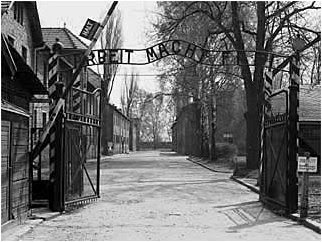
Main gate to Auschweitz and it famous sign--Work Makes Freedom
(Source: historyplace.com)

Wednesday, January 15, 2014

Hops

Many of us drink the beverage which contains, and is flavored by hops. As baby boomers, like myself, get older, and we are a rather large age cohort within the nation, we are drinking less beer, but more craft beer. Or, what I call designer beer. We are drinking less beer, but a better beer, perhaps one with a higher alcohol content, making it perhaps a good thing that we drink fewer beers.  We are also drinking more wine which may make us feel like adults when we really want to feel younger.  It wasn't too long ago that the main beer at parties was Miller Lite, but it is now New Glarus Brewery's Spotted Cow, or some other designer brand. Walking to Camp Randall a couple times this fall it became apparent that college students drink the cheap Busch beer.  Although, as one 21 year old UW Economics major told me, if they really splurge it is Miller Lite, which happens to be his favorite beer.  The innocence of youth.  As craft breweries in the state pursue market share, they desire to brand themselves as using locally grown ingredients.

A recent news article pointed out the difficulties craft breweries are having in obtaining locally grown hops. Hops is an essential part of the brewing process and is used to offset the sweetness of the malt, but to also provide unique characteristics for a particular beer.  Usually a different hop is used for the flavoring than that used to counteract the malt. It is probably the hops which makes my spouse not like beer.  There are many type of hops and those grown in the United States tend to be higher in alpha-acids, which provide the main bitterness, and also more aromatic than those grown in Europe.  Five Wisconsin craft breweries, including Central Waters of Amherst, WI and of family picnic fame, teamed up four years ago to provide seed money to hop growers.  The results are lukewarm at best only adding eight acres of hops, although the total acres devoted to hops in the beer loving state of Wisconsin is now 50! So as a percentage of land devoted to hops it was successful.  Seed money was provided because growing hops is labor and capital intensive (think of that when you see the price of a six pack).  Instead of simply putting seeds in a trench, growing hops requires the purchase of root-stock, and the installation of a set of poles and cables; hops grow over 20' and use these installations for support.  Harvesting equipment is, apparently, also expensive.  Plants that may grow more than a foot a day also need proper nourishment, thus proper fertilizer and water are important.  Hops also spoil quickly so they are often dried and sold in pellet form.


Hops farm (Google images)

Over 77% of the hops in the nation are grown in Washington state.  A hops grower in Amherst, WI grew 3,000 lbs/acre in 2013, but hopes to get up to 5,000 lbs per acre.  Some growers in Washington can obtain yields of twice his hoped for amount.  Wisconsin movement to hops at present time is rather deliberate and from a historical standpoint, this caution and care is well advised.  For one brief shining moment Wisconsin was the hops capital of the nation.  In 1867 the state produced 75% of the nation's hops.  Agoston Haraszthy, a count from Hungary, perhaps best known for starting what is now Wollersheim Winery, is thought to have grown the first hops in the state, in Sauk County.  In a first-hand account published in the Baraboo News in 1911, John Rooney noted his first hearing of hops as a teenager in 1857.  In 1865, after returning home from service in the Civil War, he would become involved in the hops growing trade. His first job was as a pole-puller and he was paid $2.50 a day, which he liked as he said the going rate for the other pole-pullers was $1.50 a day.

It is not surprising that hops production would increase, as the State was seeing large waves of immigrants from Germany, Czech, and other beer loving central European states.  According to a 1921 a Capital Times article, growing of hops "by 1867 had hopped the whole state"  from its Sauk County origins. The craze would not long last.  In 1868 even though poor weather conditions and the on-set of the "louse" reduced crop yields by 30-40%, there was an overabundance "reducing the value of the yield and the price paid." The hop bubble had burst.  John Rooney had reluctantly entered the business joining his step-father in a hops growing venture essentially as share-croppers on the Sauk County farm of O. Phelps. The two men cleared $1,100 on their 1867 sale of hops, for which the crop was sold at 56 cents a pound, but the venture lost $3,000 on their 1868 sale.  The 1868 price started at 35 cents a pound for the harvests first in, but quickly decreased to less than 10 cents a pound.  $3,000 was obviously a lot of money and he comments that some lost their farms from the investment in hops.  Hops became big in Wisconsin as an alternative to wheat which was also experiencing a bubble and the affects of the cinch bug.  After 1868 hops would start to lose its luster and other products would garner for Wisconsin agricultural primacy; as we know dairy would start on its way to primacy in the state in the 1880's.  Even after the bubble burst, some farmers persevered. By 1879 only one farmer in Dane County, Knut Heimdal of Deerfield, was growing hops; the State Historical Society says that local lore has it that he lost money on every crop, but his first in 1874.

Hops Pickers on Heimdal farm in 1879 (WI Historical Society)

Today, the problem is not just the start-up cost, but the loss of knowledge--how to best grow the crop.  Mr. Rooney commented on the importance of his instruction in drying hops.  Paul Graham, of Central Waters notes that the success of growing hops is realized most by the experienced farmer wishing to diversify. Hops, currently, are grown as far north as Ashland.  The Wisconsin Hops exchange helps match hops growers with brewers.

Six Pack (Google images)

Perhaps at some point in time, if the UW educated chemical engineer in the family decides to stop working on cleaning concoctions in Texas and take on human nourishment by batching beer back home in Wisconsin, local Wisconsin hops will be available.  I do know she will have an ample supply of relatives willing to put their taste buds on the line.

Sunday, January 5, 2014

Cold, Ice and Football

As the polar vortex, a counter-clockwise rotation of polar air funnels into the plains and the mid-west today, 85,000 plus dedicated fans (or idiots, depending upon your point of view) are heading to Green Bay, WI to watch the Packers take on the San Francisco 49er's in historic Lambeau Field.  Some are wondering if this will be coldest game in NFL history, although it will be difficult to tell since windchill calculations have changed since the 1967 ice bowl.  Of interest are the comparisons between 1967 and this weekend.  The high in Green Bay on Dec 30, 1967 was 30 degrees F, and yesterday Green Bay had a high of 31.  One difference is weather forecasting, in 1967 the Dec 31 Ice Bowl game was to be like the Dec 30 weather--sunny and 30, this is compared to present time where weather forecasters have been predicting the on-set of the polar vortex and its concomitant cold air and wind for a week.  When Steve Sabol of NFL films received his courtesy wake-up call in his hotel room that Sunday morning on the last day of 1967 he was greeted with the morning temperature of minus 16 degrees.  If there is one constant in Wisconsin, it is that you can turn around and the weather will have changed.  As I write this, it is 6 degrees in Green Bay.  If everyone who says they had attended the Ice Bowl had attended it would likely have well exceeded half the population of the Wisconsin at that time.  The history of an event is created only partially by the event itself, the rest is in the telling and re-telling of the story about the event.  The historical narrative is what forms our thoughts.
A Wisconsin Herd at the Ice Bowl (Google images)
In spring of 1967, as Packer General Manager, Vince Lombardi had purchased an $80,000 electric heating system for Lambeau field from the nephew of Papa Bear George Halas, who was the GE representative for the area. But on the day of the game, the field was frozen.  The field heating system today was installed in 2007 and contains over 30 miles of 3/4" tubing filled with a hot liquid to heat the field to 55 degrees F.  It remains to be seen how the system will function today, and if it will remain sufficiently warm to keep the player's feet nice and toasty warm. The term "frozen tundra" applied in 1967, but a 55 degree field is not a frozen tundra, yet the frozen tundra term for Lambeau Field is part of the Packer mystique and lore.

With wind and cold, the windchill effect is not calculated to be as low as it used to be.  Of course, our outerwear is supposed to be better today than in 1967. Today there is the ever-present man-made fabrics that are supposed to keep one warm, while in 1967 it was the natural wool fabric called upon to do the job. While the propane heaters will still be present on the sideline they are joined by heated benches.  The long player coats, are likely of better fabric than in 1967.And the players have well-designed gloves to wear. Of course, the macho nature of the players will affect practicality, such as wearing short sleeves, which over the course of the game can affect their play. Vince Lombardi was in a dress overcoat and fedora, Mike McCarthy will be in a ski jacket and stocking cap. Fans were kept warm in 1967 by the ersatz idea that booze kept you warm, when it in fact has the opposite affect.  Being Wisconsin, I am sure that the brandy and beer will be well present today.  Today, the Packers will provide free hot chocolate and coffee (even though caffeine is not the best for cold weather either, but at least it is a hot beverage).  In 1967 there were no hand-warmers, and the Packers are handing out 70,000 hand warmers for fans to use today.

Winning Touchdown in the Ice Bowl (Google images)
In the end, it will come down to the on-field performance of the two teams. Former Packer Mark Tauscher says there is not such thing as the cold providing a home field advantage. I tend to agree.  If it does, why did the Ice Bowl come down to a Packer QB sneak in the waning seconds of the game, rather than a Packer domination?  Or, why did the Packers lose to the NY Giants--twice in the past few years?  There is one thing that Lombardi knew that Ted Thompson seems to not know.  Defense wins championships.  In taking over the Packers in 1959, after having assessed the talent on the previous season 1-10-1 team, he traded one of the team's most talented players Billy Howton to Cleveland for halfback Lew Carpenter and defensive end Bill  Quinlan.  In his biography of Vince Lomdardi, When Pride Still Mattered, David Maraniss says even though Lombardi was an offensive coach he realized the need to "build a great defense to prevail in the NFL."  Quinlan was viewed as a talent able to set the building blocks for that defense.  While many say it will come down to the productivity of Green Bay's offense, it is a game played on two sides of the ball (and of course special teams), and I think it will really come down to how well the 25th ranked Packer defense plays against the 49er offense, which the Packer defense has been unable to stop in the past two games between these two teams. Hopefully, today's game will have a positive end result for the Packer's as did the 1967 NFL Championship game which is now in NFL lore as not only the coldest game on record in the NFL, but one of the most talked about with its dramatic ending. It is more than just for the team, but for the 85,000 plus fans, who are at the game with the wind in their face, and the cold working through their bodies, have a positive outcome.

Tuesday, December 31, 2013

Toga, Toga, Toga

While out walking the other day, I wondered why the new year begins January 1.  Why was not some other month or day chosen?  For example, it could be tied to some significant seasonal event, like the vernal equinox in mid-March.  Less than two weeks after the official start of winter, we start the a new year, rather than start the year with some change of season, or some other month. The start of spring, it seems to me, would have some logic.  In the case of the date to start the new year, its association with the vernal equinox already occurred--I am 4,000 years too late.

The first recorded celebration of the new year is in Mesopotamia in 2,000 BC, and was believed to relate to the vernal equinox. While other cultures would use dates related to the seasons, the season varied. For example, the Egyptians, Persians, and Phoenicians all used the autumn equinox as the start date of a new year.  So, instead of welcoming spring and longer days, they welcomed the coming of shorter days. Much of our western cultural heritage is derived from Greek and/or Roman culture.  The original Roman calendar had ten months, and we can tell this by the terminology we still use today for our months.  September is from the Latin for seven, October for eight, and so on, until December which derives from a Latin term for ten.  January and February would not be added to the calendar until about 700 BC, giving us 12 months in a year.  However, it was not until 153 BC that the month of January was first recognized as the start of the new year, but it would take another 110 years for that to be codified by none other than the powerful and great Oz of the time--Julius Caesar.
(Google images)

Julius Caesar's calendar was promulgated in 46 BC.  His calendar, for the Roman Empire, was based on solar rather than lunar systems. He liked the month of January, named after the Roman God Janus who had two faces, one looking back and one looking forward, as a symbol for the start of the new year. Some sources say Jan 1 was set by Caesar, but National Geographic, in commenting on a tradition in the Ukraine, says the end of the year in the Julian Calendar was January 13, making January 14 the start of each year. This may be a simple relational issue of the Julian to the Gregorian calendar, meaning Jan 1 of the Julian calendar is equal to Jan 14 of the Gregorian calendar.

Roman Empire (Google images)

Showing the brutality of his rule, Julius Caesar celebrated the declaration of his new calendar by ordering the routing of revolutionary Jewish forces in Galilee.  Drunken orgies with Romans and their togas, would replace such direct violent rampages, as the empire would celebrate the end of one and beginning of another year.  In the 4th century AD, even as the Roman Empire started to adopted Christianity, toga parties would continue to prevail in celebration of the new year. Romans apparently knew how to party, a level of which is perhaps equaled only by that at UW-Madison. Christian sects would attempt to counter this heavy-level party atmosphere by setting January 1 as the celebration of the circumcision of Christ and the day of his naming.  The celebration of his circumcision is only celebrated today in a couple faith traditions.  In the US today, Catholics celebrate January 1 as the Solemnity of Mary, the Mother of God.  It does seem a little odd to celebrate a circumcision, not to mention trying to use that feast to temper the party atmosphere.  One can just imagine the jokes. Perhaps, that was the best they could in about the 4th century AD.

February comes from the Latin Februarius which means to purify.  After the hearty parties of late December and their New Year's Day celebrations, the Romans desired to promote righteous living and would use the month of February as sort of purification to reach that goal. The Romans had a purification ritual that occurred on the full moon of that month.  Perhaps, they thought, having such a ritual would keep the werewolves at bay.  It would seem righteous living saw a decline in the Roman Empire.  When thinking of righteous rulers Nero (Emperor 54-68 AD), and Caligula (Emperor 37-41 AD), to name but two, would not come to the minds of most reasonable persons.  Needless to day, the purification ritual to promote righteousness did not abet a number of Roman rulers.

However, even though many Christian holy days were related to pagan feasts (think All Saints day and Christmas), January 1 was abolished by the Council of Trent (567) as the start of the new year due to its relation to pagan celebrations.  Following this proclamation, celebration of the new year  would shift, but it differed by nations or cultural groups.  Some areas tied it to Christmas, others to March 1 and still others to mid to late March, and the holy day recognizing the feast of the Annunciation, March 25.  As Christmas is close to the winter solstice, the Feast of the Annunciation is close to the vernal equinox.

(Google images)

Pope Gregory the Great, about a 1000 years following the Council of Trent, would establish what we know as the Gregorian calendar.  This is the calendar most of the world uses today.  Established in 1582, this calendar would restore January 1 as the start of the new year.  Most Catholic-oriented countries would adopt the calendar in short order, but it would only realize gradual adoption in countries with Protestant rulers or majorities.  In fact, Britain, and its colonies, would not adopt that calendar until 1752.  Until the adoption of that calendar, Britain and its American colonies would celebrate the start of the new year in March.  It is hard to think of the Puritans as celebrating anything, much less the start of a new year.

(Google images)
In Israel, the new year is celebrated in accord with the Jewish calendar, which is based on a lunar system, meaning that it occurred last summer with Rosh Hashanah.  So if you are in Israel, chances are you will work tomorrow.  Even though the main everyday calendar in use in Israel is the Gregorian calendar, they call New Year's Eve, "The Sylvester", after Pope Sylvester I who died on Dec 31.  To retain their Jewish identity, Israel prefers to retain the start of the new year according to their tradition. While it may not be officially celebrated, many Israeli's, particularly those in Tel Aviv which tends to orient to the west, will mark the event and then dutifully trudge off to work that day.
Prayers at the Wailing Wall, Jerusalem (April 2013)
 To the east of Israel are states that can be rather hostile to the celebration aspect of New Year's Day.  A conservative cleric in Saudi Arabia has noted that neither Christmas or New Year's Day are to be celebrated, although the prohibition apparently is not as strong against ringing in the new year; the reason is that the two are are non-Muslim holidays.  Some nation's, such as China, Taiwan, and  even the Islamic sultanate of Brunei have January 1 as a public holiday.  For some reason, January 1 is thought of in Muslim, and Jewish cultures as a Christian feast day. So there are exceptions to every rule, yet it is the most celebrated holiday worldwide.   Of course, if we were going by the Mayan Calendar, a new year would be every 400 years; but then again the world would have ended on my 55th birthday, and I know that did not happen since I celebrated my 56th birthday.

Dome of the Rock, Jerusalem (April 2013)
Regardless of what Christian feast day may be associated with January 1, it has failed to end, although it has tempered, the level of New Year celebrations, as many celebrations today would probably be put to shame by the Roman toga party.  As the Gregorian calendar has become the most adopted calendar in the world, the natural cross-cultural appeal to celebrate New Year's Day makes it the world's biggest party day of the year.  Whether or not you go to bed early, or stay up and party, drink champagne, eat cannibal sandwiches, or even  take part in a toga party, one should at least spend some time to ponder and reflect on the wonders of what life presents to each of us.

Sunday, December 29, 2013

Meddlesome Priest

On this date in 1170 Thomas Becket, Archbishop of Canterbury, was slain on the altar steps of Canterbury Cathedral.  His murder would deliver him the title martyr, and see him declared a saint within about two years of his murder.  Henry II, King of England, was responsible for the murder and would later do public penance for his role.  Born on 21 December 1118 or 1120, Thomas was from a fairly well-to-do family and was educated in Paris.

Thomas Becket was not originally a clergyman.  Serving as an aide to the then  Archbishop of Canterbury Theobold, Thomas was introduced to Henry II and the two became friends.  Seeing the acumen, intelligence, and administrative capabilities Thomas possessed, Henry appointed him Chancellor.  Henry was looking at ways to curb the power of the Church, and when Theobold died in 1161 he devised a scheme to gather more power for himself.  He would appoint his adviser as Archbishop. Henry petitioned the pope who agreed to the appointment of Thomas.  The fact that he was not even a priest was of little concern, for on June 1, 1162 Thomas was ordained, and the following day was invested as a bishop in the morning and archbishop in the afternoon.  A quick two days of work.

But, Henry would not be able to count on Thomas.  Thomas would shift his allegiance from the crown to church.  A rift over prosecution of clergy crimes from church to state, became but one of the policies of Henry that Thomas would disagree, and would begin to seal his fate.  Thomas would flee to exile in France in 1163.  A meeting in Normandy with King Henry II  in 1170 seemed to clear the air between the two, and on November 30, 1170 Thomas would return to England and his post at Canterbury.  Within a month his brains would be scattered on the floor of Canterbury Cathedral.

The air was not fully cleared between king and archbishop. Becket still refused to remove the excommunication of two bishops who supported Henry. Henry, still in France, upon hearing that his buddies, who were bishops of London and Salisbury, were still under order of excommunication would, it is believed, say the fateful words: "Who will rid me of this meddlesome priest?"  Four knights of the King would travel to Canterbury and confront Thomas during vespers.
Canterbury Cathedral (from Google images)
Edward Grim, a monk who was standing with Thomas and injured in the attack, would recount the event. It would take a knight three slays to Thomas' head before his mortal wounds would send his soul to heaven. The white of his brains was mixed with red blood, and then the further indignity of having his brains squashed about the Cathedral floor.  News of the murder spread over Europe and pilgrimages to Canterbury became commonplace.  The famous Chaucer work Canterbury Tales recounts the story of one such pilgrimage.  Henry VIII, it is said, would put the bones of Thomas Becket on trial and convict him of treason. His grave site would be destroyed in the 16th century rampage which destroyed Catholic religious sites in England.  Yet today, when one hears of Canterbury it is either associated as the seat the Anglican Archbishop, or Thomas Becket.

I am not sure what it is with Chancellor's named Thomas and their King's named Henry.  We know that Henry VIII would have his chancellor Thomas More murdered.  This is one Thomas, who shares the 21 December birthday with Thomas Becket, that prefers that trend not continue.

Thursday, December 26, 2013

Is there Someone Inside You?

Forty years ago on this date one of the top horror films of all times was released.  Based on a book by the same name, the movie The Exorcist was well received by the movie going public.  Little known is that when the book was first released in 1971 it was selling so poorly that stores were shipping their copies back to the publisher.  In fact, a major department store at the time, Mays, returned all copies they had been provided.  

However, it was a by chance appearance on the Dick Cavette show that changed everything.  While eating lunch with a publisher at a NY restaurant, the publisher received a call seeing if Blatty, who had been turned down by the show in the past (who wants a failed author on their show) would be able to fill in for a scheduled guest.  Blatty said yes, and literally ran to the studio for taping.  Luck was on his side, his couple minute stint turned to 45 minutes when the primary guest was unable to, apparently, stay sober.  His on -air discussion of the book would launch it to the best seller list, where it would stay for one year.  Let us remember this is the early 1970's well before Al Gore invention of the internet made it the world wide web.  Blatty started writing the book in 1969.  After graduation from college, Blatty who is now in his mid-eighties, was a vacuum cleaner salesman.  Not exactly an illustrious career path, particularly for a Georgetown graduate. But his Jesuit Georgetown education would serve him well in giving him the background to write about demonic possession, and propel him to success.   

The movie received mixed reviews, but was a hit with the public.  Directed by William Friedkin, Blatty would write the screenplay for a movie which garnered many academy award nominations.  Blatty would win an Oscar for his writing of the screenplay.  Top honors were not earned as they would go to The Sting.  The movie also had the affect of making the Georgetown neighborhood of Washington DC rather famous. People would flock to see the locations at which the movie was filmed.  This work is apparently based on a 1949 exorcism that took place in Maryland.  Friedkin was allowed access to diaries of the priests, and medical personnel involved in that 1949 exorcism.  Exorcism today is more regularly practiced by Protestant denominations, than Roman Catholic, even though the book and movie tend to make it a practice by the Latin church.

What is it about the movie, and the book, that made this story so popular?  William Peter Blatty believes it to be a simple message, redemption and salvation.  This of course gets to the core teaching of Christianity, that we often hear, that "God so loved the world that he sent his only son" for our redemption. While classified as a Horror film, I am not so sure that the author would agree of its placement in this genre.  In his 1994 book The Exorcist Tells His Story, Gabriele Amorth makes some telling comments a few of which are:  First, that Satan, having been defeated by Christ, fights against the followers of Christ.  Second, that even Satan was originally created by God, and God never rejects his creatures.  Third, Satan and his angels (I guess contrary to what we usually think, not all angels are good angels) "maintain their power and rank even if they use them for evil purposes" (p. 26).  Finally, in perhaps one of his more poignant statements, at the beginning of his book, Amorth brings up the difference between predestination, and God's providence when he comments: 
When I am told that God already knows who will be saved, and who will be damned, and therefore anything we do is useless, I usually answer with four truths that the Bible spells out for us:  God wants that everyone be saved; no one is predestined to go to hell; Jesus died for everyone; and everyone is given sufficient graces for salvation. (p. 22)
This brings us back to Blatty's comment on the success of the book and movie. Is there anything more powerful than that God loves us and gives us what we need for salvation and eternal life?